

Disaster Gardening
/On a recent episode of the Garden Show, Victoria Coyne and Sally Spillane spoke about what to do after a wind event or other destructive weather event that wipes out trees in your area.
Here are the big questions and short answers they covered:
#1 reason NOT to plant White Pines or Norway Maples, and what trees should you plant?
White pines and Norway Maples are bad choices for most Hudson Valley homes because mature trees commonly reach 70–100 feet tall and 30–50 feet wide. They are HUGE and susceptible to storm damage. The wood is relatively soft, and long limbs can break during heavy snow, ice, or wind. These are best used in areas away from any structures, especial your home.
Can you still plant trees or keep trees near your house?
Yes! Trees that shade your home in the summer are energy efficient and make summer more comfortable. Hardwood trees like Oak and Maple, and shade treed that don’t grow quite as huge, like the trees below.
Tips for pruning the survivors
Bring in a professional Arborist for the big stuff. Don’t mess around with your safety or future storm damage. Have a professional come out and assess, trim, and/or take down anything that could fall on your home, power lines, garage or driveway.
For the smaller stuff, like understory trees. If you are pruning them yourself:
1. Remove Broken and Dangerous Branches First
Begin by removing any broken, hanging, or cracked limbs that pose a safety hazard. Make clean cuts just outside the branch collar (the swollen area where the branch joins the trunk) to encourage proper healing. Never leave jagged stubs or tear away damaged branches.
2. Restore the Tree's Natural Shape
After the damaged wood has been removed, selectively prune to create a balanced canopy. Remove crossing, rubbing, or poorly attached branches. (Avoid removing more than 20–25% of the living canopy in a single season, as excessive pruning can stress the tree and slow recovery.)
3. Monitor Recovery and Prune Gradually
Give the tree time to recover before making additional structural cuts. Water during extended dry periods, apply a 2–3 inch layer of mulch around the root zone (keeping it away from the trunk), and inspect the tree over the next one to three years for dead or weakened branches that may require further pruning.
Replacing Fallen Trees
During the 4th of July Wind Event, people in the Hudson Valley lost a lot of trees. Trees that shade your house are lovely AND energy efficient, but you need to choose wisely when it comes to the variety of trees you keep close to your home as climate change increases the likelihood of extreme weather events.
If you lost trees here are our tips for replacing them.
We know people want to bring in big trees to replace the huge trees you lost. But a smaller tree in a container will catch up to a bigger, ball and burlapped tree. (One big problem is that people leave the burlap on or leave the cage on, and the tree never recovers from that treatment.)
Trees need to be planted well in the first place. Read our “How to Plant a Tree” Article here.
Tree replacement recommendations:
River Birch

‘Heritage’ River Birch(Betula nigra ‘Heritage’)
‘Heritage’River Birch ‘Heritage’ Growing Zones: 4-9
Mature Height: 40-50 ft.
Mature Width: 25-30 ft.
Sunlight: Full or Partial
Soil Conditions: Very wet tolerant, clay tolerant
Bark: very ornamental in maturity
Fall color: yellow
As is implied in the name, river birch are well-suited for planting along river banks, and in other spots which can flood for weeks at a time, but they also thrive in normal soil conditions. It’s one of our best-selling trees!
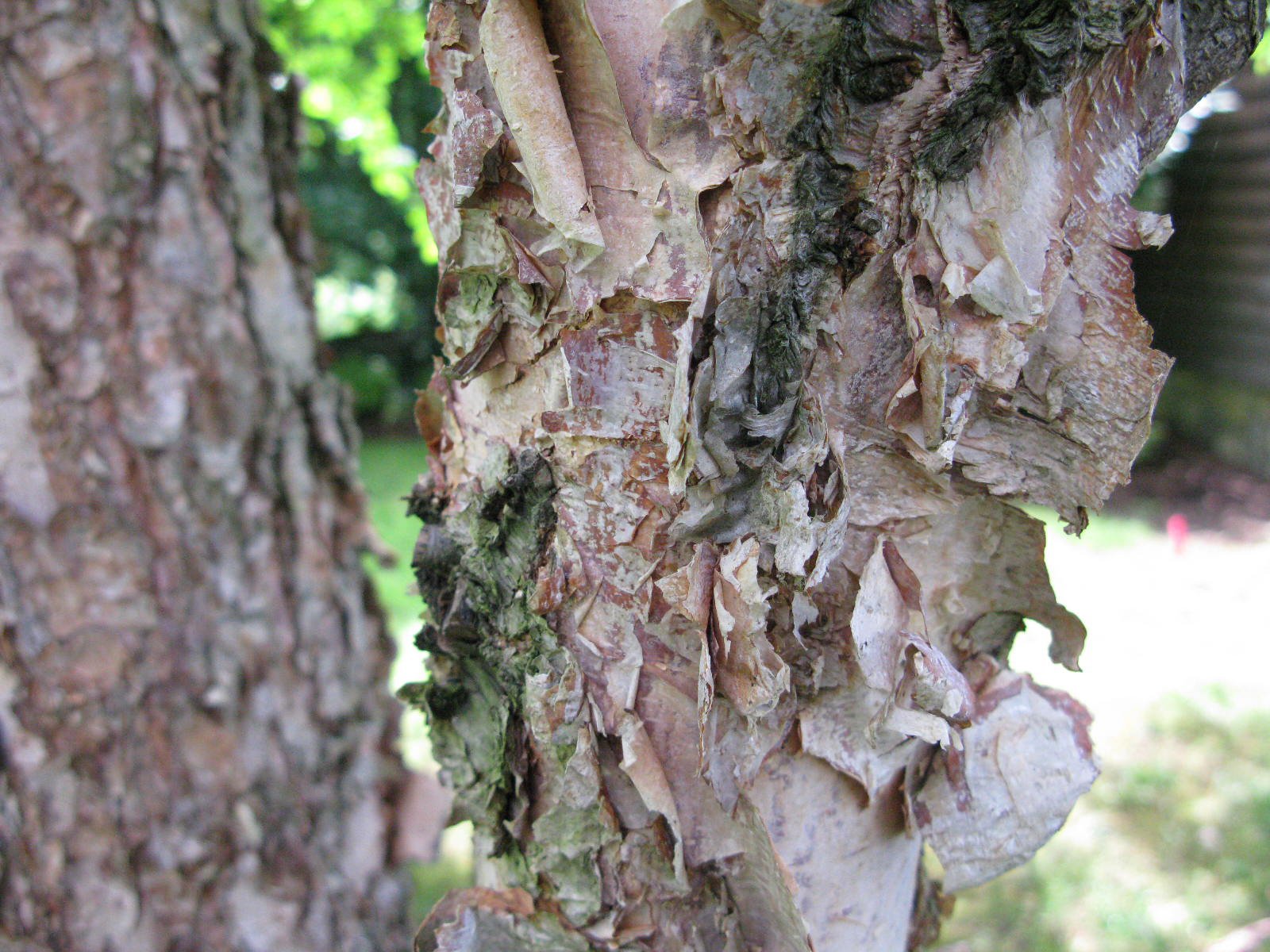
Why we love it: This native tree is elegant and performs better in our area than its European cousin. Its bark is not quite as showy, but its form is lovely.
We love the ‘Heritage’ variety because of its glossier leaves, but it really shines in a winter garden too, because of its attractive silhouette and exfoliating reddish brown bark. The texture of the bark becomes more dramatic as the specimen matures. The dark outer bark peels, exposing salmon color underneath.
Betula nigra is fast growing, and the multi-branch, clumping river birch is graceful and elegant. We especially like the sophisticated look of the multi-trunk river birch planted in a grove.
Dawn Redwood
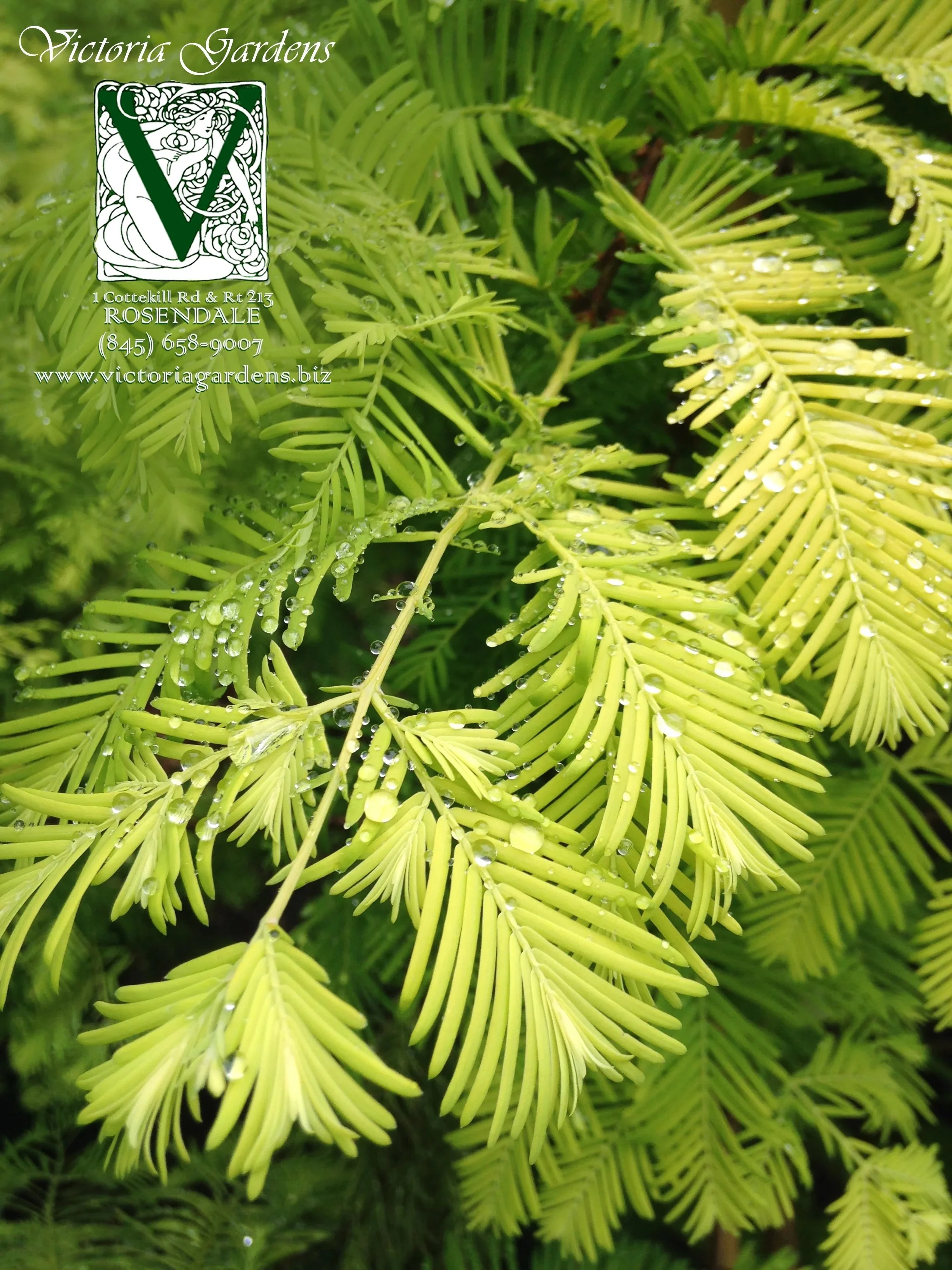
Dawn Redwood Metasequoia glyptostroboides ‘Gold Rush’
Dawn Redwood Growing Zones: 4-8
Mature Height: 40-50 ft.
Mature Width: 20-30 ft.
Sunlight: Full or Partial
Soil Conditions: Very Adaptable
Drought Tolerance: Good
Fall color: Orange and yellow
The Dawn Redwood tree, Metasequoia glyptostroboides, is a deciduous conifer, with soft needle-like leaves that look like evergreens, but are bright green in the spring and brilliant orange/red in the fall. The needles are then shed in winter.
Dawn Redwood trees are a very interesting–one of the few deciduous conifers in the world.
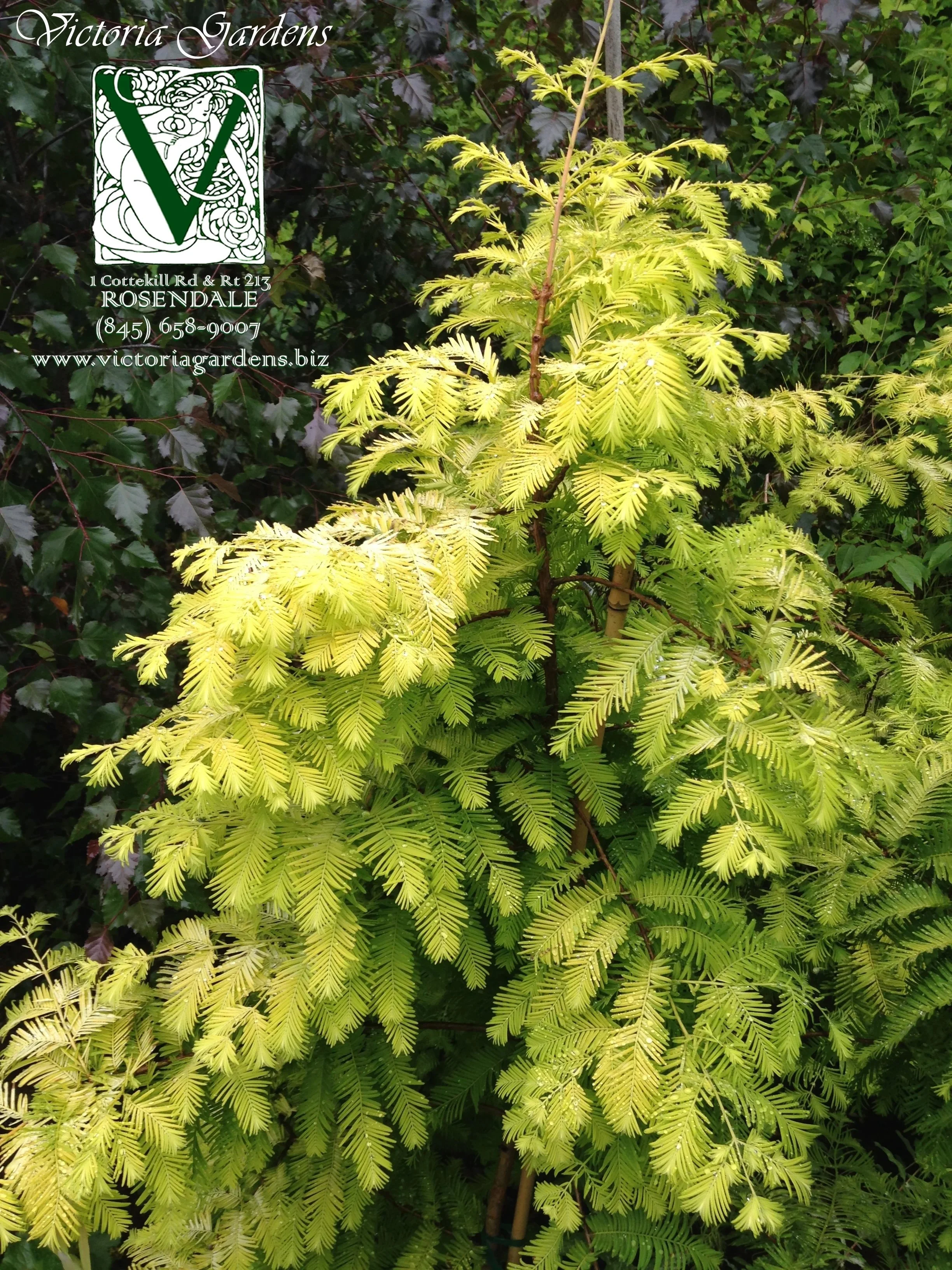
It is feathery pyramidal in form with a straight, fluted trunk. It grows very fast to 40’ and can grow to 70’. Dawn Redwoods are considered by many to be the Fastest Growing Conifer.
Plant away from foundations and plan for it eventually being a very large tree.(Under ideal conditions they have been reported to grow up to 5 feet per year.)
Adaptable to almost any soil (except desert sand) can withstand both moderate flooding and drought. Dawn Redwoods can even grow in standing water.
Great when planted alone as an ornamental tree or in groupings. A great tree for borders and fence lines. Grows consistently into a pyramidal form and makes an attractive shade tree.
Once very hard-to-find, but now we have found reliable growers. At Victoria Gardens, we keep these lovely trees in stock throughout the year and we use them in plantings when ever we get a chance!
For more tree recommendations for New York’s Hudson Valley Gaerdens Check out Trees for Hudson Valley Gardens and Trees That Thrive in the Hudson Valley.
Victoria Gardens is located in Rosendale, NY on the corner of Rt 213 and Cottekill Road. We are a fully stocked plant nursery, garden center, and garden gift shop.
At Victoria Gardens we divide up our nursery according to where the plant will go in your garden.
At Victoria Gardens, if you have a garden that is in full sun, you won’t accidentally fall in love with a plant that needs shade.
You can look at the flowers, colors, and textures instead of squinting at the tags, trying to figure out if it will survive in your garden.
If you are browsing in the right section at Victoria Gardens, it will survive and thrive!